Our History

Towards a Sustainable, Safe,
and Transparent Coffee Industry

Indonesia is one of the world’s largest producers of specialty coffee, endowed with a rich diversity of varieties, flavors, and ecosystems. However, the specialty coffee value chain in Indonesia continues to face significant challenges: post-harvest practices are not yet fully environmentally friendly, hazardous compounds such as acrylamide are still found at high levels during roasting, and weak traceability systems from upstream to downstream limit Indonesia’s access to premium global markets.

At the same time, circular economy approaches—emphasizing resource efficiency, waste reduction, and renewable biomaterial innovation—have not been systematically adopted in the coffee production system, particularly among Small and Medium Enterprises (SMEs).

Learn More About Our Journey

From the plant to the cup, each phase is traced

From the plant to the tasting, each phase is traced to ensure the highest quality, sustainability and a fair supply chain. We monitor every step, from growing our products on local plantations, through the various stages of processing, to distribution, ensuring that each product meets high ethical and environmental standards. In this way, we protect producers and consumers, promoting transparent and responsible trade that supports local communities and guarantees a unique and conscious consumption experience.

Coffee

Coffee Farming

Cocoa

Harvest and Processing

Tea

Collection and Shipment

Vanilla

Screening, Roasting, And Grinding

Honey

Product Packaging

Sugar

Consumption And End Of Life

Circular Economy Potential in the Coffee Industry

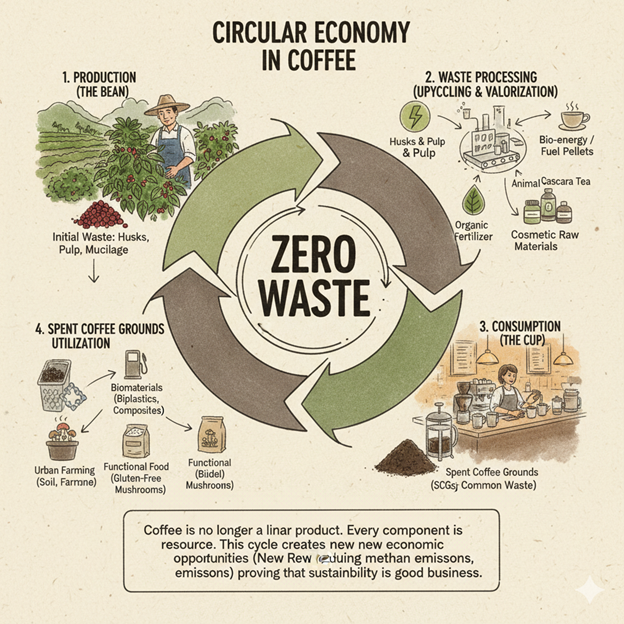
The coffee industry holds remarkable potential to embrace a circular economy approach. From cultivation to consumption, every stage of the value chain generates by-products that can be reimagined as valuable resources rather than waste. By transforming husks, pulp, and spent grounds into fertilizers, bioenergy, or innovative products, the sector can reduce environmental impact while creating new economic opportunities. This shift not only enhances sustainability but also empowers farming communities and businesses to thrive in a resource-efficient future.

Find out More
Donna, a woman in the coffee supply chain

OUR COMMITMENT

Quality, Ethics, Sustainability

Quality
Quality

The Quality pillar ensures that the transition to a circular economy maintains, or ideally enhances, the standards of the final products. This principle applies across the entire lifecycle:

Read more
Support
ETHICS

The Ethics pillar grounds the project in fairness, transparency, and accountability, ensuring that the economic benefits of the circular model are distributed equitably.

Read more
Environment
Sustainability

Sustainability ensures that CircularTrace creates long-term value by operating within environmental limits and supporting regenerative systems.

Read more

Discover the Authentic Taste of Indonesia

Discover the authentic taste of Indonesia. Discover the rich, diverse flavours of the archipelago with our premium speciality coffees. Each bean is selected for its unique flavor profile, a direct result of the rich volcanic soil and the distinctive traditions of processing.

We prioritize respecting local traditions of agroforestry and shade-growing, ensuring a fair and sustainable supply chain that protects the environment and supports smallholder communities. This dedication to sustainability includes embracing the circular economy, utilizing byproducts like coffee pulp (cascara) to enrich the very soils that nourish the plants.

We work directly with producers across Sumatra, Java, and beyond to offer an unmistakable taste experience, backed by complete Traceability. This transparency enhances the richness and variety of Indonesian soils, guaranteeing quality and integrity from the mountains to your cup.

Arabica
Cascara Kawa Tea

Cascara Kawa Tea is a functional beverage crafted from cascara (coffee cherry husk), a valuable by-product of the coffee agroindustry. Developed with a sustainable approach, it delivers naturally rich polyphenols and antioxidant activity, offering a clean-label tea with a smooth, fruity, and refreshing character.

To the product
Arabica
Cascagenic

Cascagenic is a functional beverage developed from cascara (coffee cherry husk) through a circular economy approach. Rich in natural phenolic compounds and antioxidants, it offers a clean-label drink designed to support protection against oxidative stress with a refreshing, modern taste.

To the product
Arabica
KatekinPlus

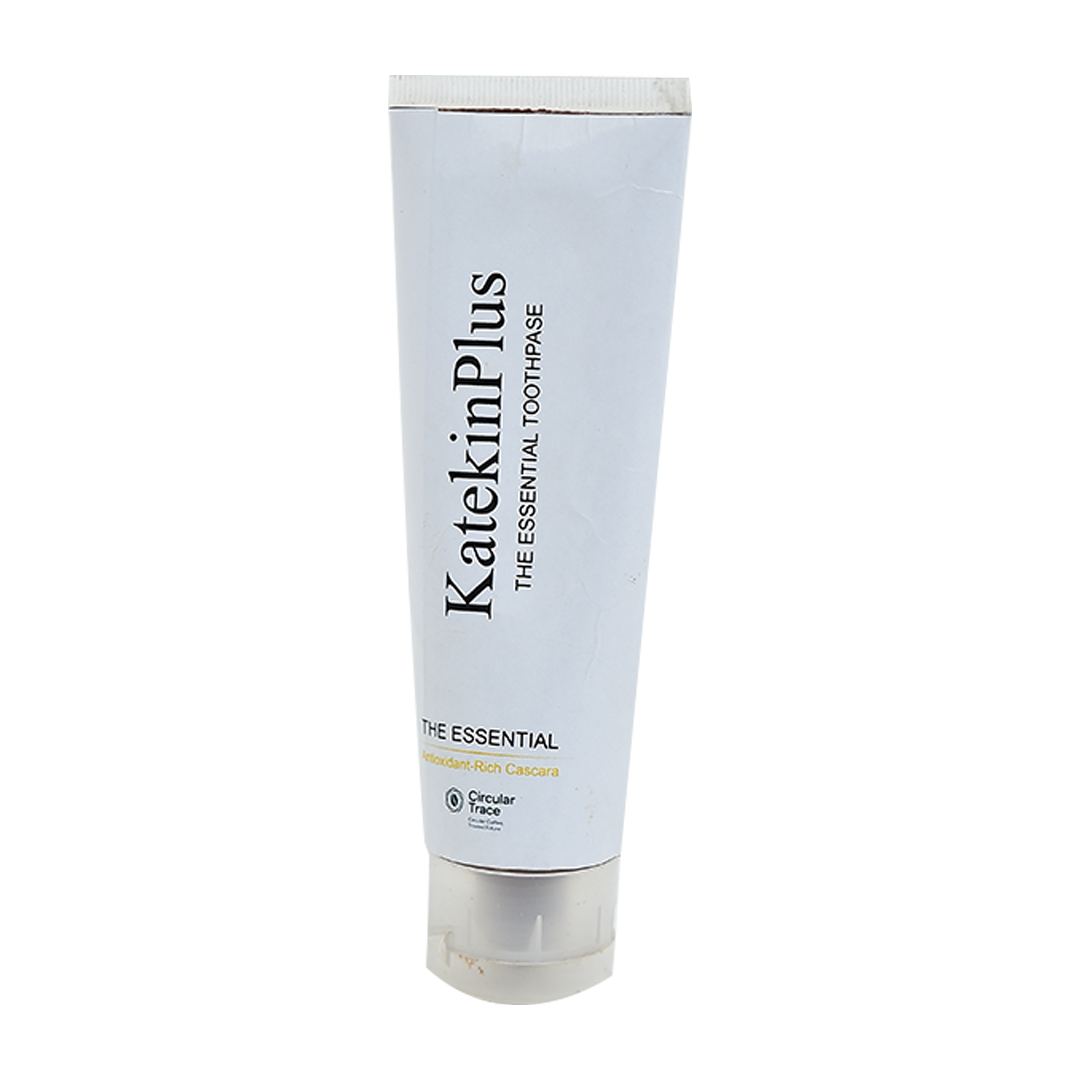
KatekinPlus is a natural toothpaste developed through a circular economy approach, utilizing valuable coffee agroindustry by-products. Formulated with activated charcoal from coffee husks and cascara extract rich in phenolic compounds and natural antioxidants, it helps support effective cleansing and oral freshness in a clean-label formulation.

To the product
Arabica
CascaraSkin

CascaraSkin is a natural skin lotion developed from cascara extract, a valuable coffee by-product rich in polyphenols and natural antioxidants. Formulated to help protect the skin from oxidative stress, it supports skin hydration, vitality, and overall skin health through a sustainable and clean-label approach.

To the product
Arabica
Arabica Aie Dingin

Low Acrylamide Specialty Coffee is a high value-added coffee innovation integrating food safety, sustainability, and supply chain transparency. Designed to meet global quality and safety standards, it features full traceability from farm to final product, while highlighting circularity and sustainability impact aligned with the Sustainable Development Goals (SDGs).

To the product

Certified Products, Real Impact

Empowering coffee communities through sustainability

Sustainability for us means empowering local farming communities, enhancing transparency, and ensuring that every step in the coffee value chain benefits people and the planet. Through CircularTrace, every product is digitally tracked — from farm to cup — reflecting Indonesia’s leadership in the circular economy.

Traceability
TRACEABILITY

From seed to cup, each product carries a verified digital identity that tells its story — origin, journey, and positive impact.

Circular Economy
CIRCULAR ECONOMY

Nothing goes to waste — coffee by-products are transformed into new value through innovation and eco-friendly design.

Fair Partnership
FAIR PARTNERSHIP

Empowering smallholder farmers through fair trade, capacity building, and shared prosperity.

Sustainability
SUSTAINABILITY

Committed to climate-smart farming, biodiversity protection, and regenerative practices for a greener future.

Live the Authentic Coffee Journey in the Heart of Indonesia

Discover Indonesia beyond the usual destinations — a journey that connects you deeply with nature, culture, and the people behind every cup of coffee. Wander through lush coffee plantations in the highlands of Indonesia, explore traditional post-harvest practices passed down through generations, and engage with local communities preserving both heritage and sustainability.

Experience Indonesia’s rich tapestry of flavors and stories — where every bean tells the tale of the land, the climate, and the hands that nurture it. CircularTrace invites you to trace the journey of coffee from seed to cup, offering an authentic experience rooted in culture, ethics, and sustainability.

Discover our community-based coffee experiences and explore the real Indonesia — vibrant, diverse, and full of life.

Explore the Journey

Read our articles

Article 1
Our Writings
MDL Benefit: a sustainable business model empowering african farmers

A sustainable business model MDL Benefit is a company that combines fair trade with a concrete commitment to sustainability...

Monday, March 31, 2025
Article 2
spotify.com
Behind a cup of coffee: prices, market and quality

Behind a Cup of Coffee: Prices, Market and Quality Spotify The two sides of coffee: a protagonist drink but a...

Monday, March 24, 2025
Article 3
Our Writings
MDL Società Benefit S.r.l.: ethical trade between biodiversity and local communities in Africa

In the heart of the Moon Mountains, an area rich in biodiversity and culture, MDL Benefit Corporation has created an...

Sunday, March 23, 2025

Universiti Malaysia Terengganu Students Deepen Coffee Science with CircularTrace Principal Researcher from UNEJ

Jember, December 2025

International Outbound Program UMT UNEJ CircularTrace

CircularTrace, through its academic collaboration with the University of Jember (UNEJ), continues to strengthen international research and education networks. As part of this effort, UNEJ welcomed a delegation of 20 students from Universiti Malaysia Terengganu (UMT) participating in the International Outbound Program.

The activity was led by CircularTrace’s Principal Researcher, Dr. Asmak Afriliana, who provided intensive, hands-on training in coffee science and technology. The program was designed to combine practical laboratory experience with in-depth scientific understanding of coffee as one of Indonesia’s leading agricultural commodities.

Comprehensive Training Across the Coffee Value Chain
During the program, UMT students explored three key aspects of the coffee value chain:

  • Roasting Techniques: Understanding roasting profiles to optimize flavor development and highlight the best sensory characteristics of coffee beans.
  • Caffeine Analysis: Laboratory-based methods to accurately measure caffeine content, ensuring product quality and food safety standards.
  • Cupping Test: Sensory evaluation training to assess aroma, flavor, body, and aftertaste in accordance with international cupping protocols.

Dr. Asmak Afriliana emphasized that the program was not merely an academic visit, but a structured research-based knowledge transfer initiative.

“Through CircularTrace, we want students to understand that coffee is not just an agricultural commodity, but a complex scientific subject. From chemical transformations during roasting to precise caffeine analysis, every process requires accuracy and scientific rigor,” she explained.

This activity represents a tangible implementation of international collaboration between Universiti Malaysia Terengganu (UMT) and the University of Jember (UNEJ). The partnership is expected to strengthen bilateral academic relations while enhancing student competencies across the ASEAN region, particularly in food technology, coffee science, and sustainable agriculture.

CircularTrace Successfully Tests Pyrolysis Reactor Converting Coffee Processing Waste into High-Quality Activated Carbon

Padang, December 9, 2025

Pyrolysis Reactor Test

CircularTrace, a circular economy consortium focused on sustainable technology solutions, is proud to announce the successful testing of its latest prototype pyrolysis reactor. This innovative equipment is designed to convert biomass waste from coffee processing into valuable activated carbon.

Core Technology: Pyrolysis with Digital Control
The tested pyrolysis unit represents a significant advancement in CircularTrace's efforts to optimize agro-industrial waste utilization. Equipped with an advanced digital temperature control system, operators can precisely set and maintain heating temperatures during pyrolysis. Temperature control is crucial, as it directly affects the surface area, porosity, and overall quality of the resulting activated carbon.

The pyrolysis process involves the thermal decomposition of coffee biomass—such as husks, hulls, and spent grounds—in an oxygen-free environment. The process produces carbon char, which can be further activated to create high-quality activated carbon suitable for various applications.

Dual Benefits: Environmental and Economic
Each year, coffee processing generates tons of biomass waste, often discarded or stockpiled, causing environmental issues. This technology allows CircularTrace to reduce landfill waste while transforming it into a valuable product, aligning with circular economy principles.

Activated carbon has high market demand for applications including water filtration, air purification, and the pharmaceutical industry. Converting coffee waste into activated carbon provides a sustainable, low-cost raw material, enhancing economic opportunities for coffee farmers and processors.

“The success of this test proves that coffee waste is no longer a problem, but a valuable resource. The digital control on our pyrolysis unit ensures consistent activated carbon quality, paving the way for commercial-scale production,” said Prof. Novizar Nazir, Head of the Circular Economy Consortium.

Progress Report on Coffee Acrylamide Reduction Using Biofermentor and Fast Roasting Method

November 11, 2025

Coffee Processing Progress

CircularTrace is pleased to present an encouraging progress update on our ongoing initiative to reduce acrylamide levels in coffee beans—an essential step in supporting sustainable and health-focused processing technologies.

Biofermentor Success with Bondowoso Arabica
We are delighted to announce that our biofermentation method has successfully reduced acrylamide content in Bondowoso Arabica coffee beans. This significant milestone independently validates the strong results previously observed in the fermentation of Solok Radjo Arabica.

The consistency of these outcomes across different Arabica varieties further strengthens the potential of our biofermentor technology as a scalable, natural, and effective solution for improving both the safety and quality of specialty coffee.

Key takeaway: The biofermentor effectively reduces acrylamide levels across multiple Arabica varieties, confirming cross-varietal reliability.

Encouraging Results from Fast Roasting
Alongside our biofermentation advancements, the development of an optimized fast roasting method has produced similarly positive results. Our proprietary roasting technique has demonstrated a measurable reduction in acrylamide formation during thermal processing.

This dual-approach strategy—combining advanced pre-processing via biofermentation with optimized thermal treatment through fast roasting—positions CircularTrace as a leader in creating comprehensive, lower-acrylamide processing solutions for specialty coffee.

CircularTrace remains committed to continuous research and innovation to bring cleaner, safer, and more sustainable coffee processing methods to producers and consumers worldwide.

Cascara Kawa Tea: A Fusion of Tradition and Innovation

November 11, 2025

Cascara Kawa Tea

Padang, Indonesia — In an inspiring blend of tradition and innovation, researchers from the Circular Economy Research Group of the Department of Food and Agricultural Product Technology at Andalas University conducted an experimental tea cupping session combining Cascara Tea (made from dried coffee cherry husks) and Kawa Leaf Tea (a traditional West Sumatran beverage brewed from roasted coffee leaves).

The innovative mixture, called “Cascara Kawa Tea,” aims to explore new flavor possibilities while promoting the sustainable use of coffee by-products. Cascara, known for its antioxidant potential and fruity aroma, was combined with kawa leaves—renowned for their mild bitterness and earthy flavor. The goal is to create a beverage that balances the fruity sweetness of cascara with the deep, herbal notes of kawa leaves.

During the tasting session, researchers evaluated several blending ratios to determine the ideal sensory profile, including color, aroma, body, and aftertaste. Preliminary results indicated that the combination produced a pleasant harmony of fruity, herbal, and caramel notes—offering both sensory appeal and potential health benefits.

According to Prof. Dr. Novizar, this innovation not only supports zero-waste coffee processing but also strengthens the identity of local beverages rooted in Indonesian heritage. The Cascara Kawa Tea project is part of a broader initiative to develop sustainable functional drinks derived from coffee-based materials.

“We believe this beverage could represent the future of Indonesia’s traditional drinks — local, sustainable, and rich in flavor,” said one of the lead researchers during the cupping session on November 11, 2025.

Field Study of Circular Economy Research Group – Solok Radjo and Lasi, West Sumatra

November 2, 2025

Field Study Circular Economy Solok Radjo
Field Study Circular Economy Lasi
Circular Economy Research Group Field Study
Circular Economy Field Visit West Sumatra

Solok Radjo and Lasi, West Sumatra – In November 2, 2025, a group of eight university students from the Circular Economy Research Group conducted an essential field study across two key coffee-related locations: the established Coffee Industry in Solok Radjo and the Arabica Coffee Farm in Lasi.

The primary objective of this visit was to directly engage with major coffee stakeholders and gather critical insights into the challenges they face. Specifically, the research team aimed to identify the barriers preventing these stakeholders from participating in traceability programs—a cornerstone of sustainable and transparent coffee production.

During the visit, the students also documented various circular economy practices already implemented by local industries and farms, including waste utilization, water management, and energy efficiency initiatives.

“Hearing directly from the coffee farmers and processors about the practical hurdles—be it cost, technology access, or regulatory complexity—is invaluable,” said one of the student researchers. “It allows our research to be grounded in reality and propose feasible solutions for wider adoption of both traceability and circular economy models.”

This field study represents a crucial milestone in the ongoing research project, ensuring that the final recommendations for circular economy development are practical, sustainable, and directly aligned with the real needs and constraints of the local coffee community.

Coffee Fermenter Innovation: Advancing Circular Economy and Bean Quality

November 3, 2025

Coffee Fermenter Innovation

Universitas Jember (UNEJ), Indonesia – The Circular Economy Coffee Research Team has taken a significant step in coffee processing innovation. On November 3, 2025, the team concluded a strategic discussion with partners from PT SAS to design and construct a cutting-edge coffee fermenter dedicated to optimizing bean fermentation.

This sophisticated fermenter is more than just a container—it is an intelligent system capable of monitoring and analyzing the fermentation environment in real-time. Crucial parameters, including pH, glucose, alcohol, ethanol, oxygen, and carbon dioxide, are accurately tracked, enabling a controlled, consistent, and optimized fermentation process to achieve the finest coffee flavor profiles.

The fermenter also incorporates ergonomic and economic design considerations, ensuring usability for farmers and scalability for coffee producers. A standout feature is its gas capture system and inlet valve for carbon dioxide (CO2), which facilitates advanced processing techniques such as carbonic maceration. This allows producers to create unique, high-value flavor profiles while adhering to the principles of a circular economy through waste and gas management.

In essence, this innovation bridges the gap between academic research and industry needs, offering a technological solution that enhances processing efficiency, product quality, and the global competitiveness of Indonesian coffee.

Field Visit to Sikincau Coffee Farms Showcases Potential of 'Circular Cultivation' in West Lampung

October 2025

Sikincau Coffee Farm Young Arabica
Old Robusta Coffee Trees in West Lampung

Sikincau, West Lampung, Indonesia – Following a successful National Seminar held on October 24, participants in the two-day event engaged in an insightful field visit today, October 25, to two distinct coffee farming sites in the Sikincau region of West Lampung.

The visits provided a practical demonstration of how both new and mature coffee crops, when managed correctly, represent significant potential for sustainable development.

The visit was attended by the RIKUB 2025 Consortium represented by its Chairman, Prof. Dr. Novizar Nazir. The Consortium's presence highlights the national academic commitment to supporting high-impact, sustainable agricultural innovation.

The first stop was an Arabica coffee farm featuring young, high-yield plants. Remarkably, these new crops have already begun bearing fruit at the young age of just 20 months. This early productivity underscores the success of modern, attentive cultivation methods and quality-focused propagation.

The second site offered a stark, yet equally impressive, contrast: an old-growth Robusta coffee farm. The plants here are approximately 40 years old, having undergone intensive rejuvenation through careful pruning and recultivation. Despite their age, the decades-old trees are now yielding high-quality fruit, a powerful testament to the value of regenerative practices and long-term resource management in farming.

Both farms displayed excellent fruit yields, illustrating a key takeaway for the seminar participants and the visiting academics: well-managed coffee—whether newly planted or decades old—holds immense potential for consistent development.

Prof. Novizar Nazir noted that the success of the Sikincau farmers in managing crops across their entire life-cycle reinforces the message central to the CircularTrace concept: that resources (in this case, genetic material and decades of established root stock) can be maintained, renewed, and maximized for excellent output, moving away from a 'take-and-replace' linear model.

The field trip provided invaluable real-world data to support future national research initiatives.

Traceability Innovation Amidst EUDR Pressure (Live Report from Lampung Coffee National Seminar)

October 2025

Lampung Coffee National Seminar
EUDR Compliance Discussion

LAMPUNG, Indonesia – The critical challenges and technological opportunities facing the global coffee market under the shadow of the European Union Deforestation Regulation (EUDR) were brought into sharp focus today at the National Coffee Seminar in Lampung. Prof. Dr. Novizar Nazir, Chairman of the Rikub 2025 Consortium, was among the attendees, underscoring the consortium’s commitment to promoting advanced, sustainable solutions for the agricultural sector.

The seminar, held on October 24, 2025, served as an important platform for industry stakeholders to discuss the accelerating need for robust supply chain data — a theme intrinsically linked to CircularTrace insights on EUDR compliance.

CircularTrace Insights: Coffee Traceability Becomes a “Strict Prerequisite” Under EUDR Pressure; Global Market Stocks Not Yet EU-Ready

Prof. Nazir’s attendance is timely, aligning with the growing consensus that traceability is no longer a value-add but a strict prerequisite for maintaining access to the lucrative European Union market, as highlighted by CircularTrace’s recent analysis.

In her presentation, Judith Ganes of J. Ganes Consulting emphasized that traceability has shifted from being a marketing feature to becoming a compliance necessity, creating both structural challenges and technological opportunities.

1. Traceability: The Gateway to EUDR Compliance and Global Stock Risk
  • Geolocation Mandate: To prove compliance, traceability systems must provide accurate geolocation information (plot polygons), directly linking every bag of coffee downstream to the farmer’s plot upstream.
  • Certified Stock Crisis: Alarmingly, nearly all existing certified coffee stocks in major exchange warehouses (such as the New York ICE “C” Market) are reportedly not EU-ready. They lack mandatory traceability and geolocation data, posing significant trade risks.
2. Economic Impact: Creating Disparity and Cost Burden
  • Risk to Smallholders: Most coffee farms are managed by smallholders with limited resources and digital literacy. Collecting precise geolocation data remains their biggest hurdle, threatening their access to the EU market.
  • Added Cost Burden: Implementing secure digital traceability systems, often powered by Blockchain, requires substantial investments in technology, training, and verification — costs that could shift non-compliant coffee to non-European markets.
3. Opportunity for Technological Innovation
  • Adoption of Digital Platforms: The push for EUDR compliance is accelerating the development and adoption of digital traceability platforms and blockchain-based verification to ensure transparent and tamper-proof supply chains.
  • Multi-Dimensional Benefits: A robust traceability system not only ensures compliance but also enhances consumer trust, operational efficiency, and brand integrity, while enabling rapid recalls and data-driven decision-making.
Conclusion

The presence of Prof. Dr. Novizar Nazir at the National Coffee Seminar in Lampung underscores the academic and research community’s deep engagement with the EUDR imperative. As CircularTrace concludes, the key to success for producing nations lies in the swift and collaborative adoption of digital traceability solutions that are both affordable and inclusive for smallholder farmers. Delaying action risks losing access to one of the world’s most valuable coffee markets.

Circular Economy Research Group Welcomes Six New Young Researchers to Coffee By-Product Valorization Program

October 2025

Circular Economy Research Group
Coffee By-Product Valorization

CircularTrace is proud to announce the expansion of its dedicated Circular Economy Research Group with the addition of six new young researchers. This dynamic team will focus on a critical area of waste reduction and resource efficiency: the valorization of coffee by-products. By converting the enormous volume of waste generated by coffee processing into high-value products, this initiative aims to provide scalable solutions that boost farmer income and drastically reduce environmental impact.

The six research projects, focusing primarily on coffee cherry pulp (cascara), parchment, and spent coffee grounds, are outlined below — each promising a unique contribution to the circular economy model:

Pillar 1: Green Extraction and High-Value Ingredients
  1. The Influence of Natural Deep Eutectic Solvent (NADES) Type on the Enhanced Extraction and Quantification of Bioactive Compounds from Red Coffee Cherry Pulp (Cascara)
    This research will utilize Comparative Quantification (HPLC-DAD) to measure and compare the yield and purity of key compounds like Chlorogenic Acids and Caffeine. The Circular Economy Potential lies in adopting Green Chemistry by replacing toxic organic solvents with biodegradable NADES, establishing an environmentally friendly process to transform cascara into high-value extracts for various industries.
  2. Optimization of Natural Deep Eutectic Solvent (NADES) Concentration and Water Content for Maximized Recovery and Selectivity of Phenolic Compounds from Red Coffee Cherry Pulp
    Focusing on Process Optimization using Response Surface Methodology (RSM), this study aims to pinpoint the ideal NADES-to-water ratio for maximizing the selective recovery of target phenolic compounds. This guarantees maximum resource efficiency and economic viability, as higher, purer yields from cascara significantly increase the profitability of the waste conversion process.
Pillar 2: Sustainable Products and New Markets
  1. Preparation and Advanced Adsorption Characterization of Activated Carbon Derived from Various Coffee By-Products (Parchment, Pulp, and Spent Coffee Grounds)
    This project requires in-depth Adsorption Studies and Material Characterization (including BET Surface Area and Pore Size Distribution) to assess the carbon's efficiency in removing pollutants like heavy metals. It converts multiple low-value solid wastes into a high-value adsorbent for water or air purification, achieving a crucial circular economy objective by using coffee waste to address environmental remediation challenges.
  2. Development and Functional and Sensory Quality Assessment of a Novel Beverage Blend: Coffee Cherry Tea (Cascara) Fortified with Kawa Leaf Tea Extract
    Key analysis involves Nutritional and Stability Analysis for Total Phenolic Content and Antioxidant Activity, complemented by Sensory Evaluation and Shelf-Life Testing. This initiative cleverly upcycles two distinct coffee processing wastes (cascara and kawa leaves) into a marketable functional beverage, enhancing farmer income and diversifying product offerings.
  3. Sustainable Production and Physicochemical and Microbial Stability of Concentrated Syrup from Coffee Cherry Pulp (Cascara) for Food Industry Applications
    The research focuses on Formulation and Shelf-Life Study, examining parameters like Brix, pH, and viscosity, alongside essential Microbial Stability Testing. This project facilitates the direct conversion of perishable cascara into a shelf-stable, easily transportable, and marketable food ingredient — providing immediate economic value and significantly mitigating environmental pollution from rotting organic material.
  4. Formulation and Physicochemical Stability Evaluation of Skin Lotion Enriched with Red Coffee Cherry Pulp (Cascara) Extract
    The core analysis involves thorough Stability and Quality Control Testing of the final lotion, measuring parameters such as pH value, viscosity, homogeneity, and organoleptic properties over time and temperature. This project integrates a high-antioxidant coffee waste extract into the high-value cosmeceutical sector, providing a sustainable, natural ingredient for the “clean beauty” market and maximizing the economic return from upcycled cascara.

CircularTrace looks forward to sharing the findings of these six important studies, reinforcing our commitment to turning agricultural waste into valuable resources and accelerating the global shift towards a robust circular economy.

Functional Testing and Sample Preparation Underway at PT SAS for Low-Acrylamide Specialty Coffee

October 23, 2025

Low-Acrylamide Specialty Coffee Research

The CircularTrace Research Initiative, committed to sustainability and food safety innovation, has reached a significant milestone in its collaborative project with consortium partner PT SAS. The RIKUB Team from Universitas Jember (UNEJ), led by Principal Investigators Dr. Jayus and Dr. Asmak Afriliana together with their research members, recently concluded a second on-site trial at PT SAS facilities.

The visit centered on two critical objectives: functional testing of specialized equipment and preparation of specialty coffee samples designed to significantly reduce acrylamide content. Acrylamide, a probable carcinogen formed during the high-temperature roasting process, poses a major safety concern for the global coffee industry.

The goal of this intensive collaboration is to establish a validated and repeatable process for producing high-quality coffee with exceptionally low acrylamide levels, without compromising the desired flavor profile of specialty beans.

Innovation and Future Patent Filing

The project aims to solidify its unique process and technology, with a draft patent expected to be filed immediately following the successful conclusion of the current testing phase.

Furthermore, aligning with the core principle of Traceability, a major innovation is being tested on the roasting equipment itself. The team is integrating advanced sensors into the roasting machine to develop a system capable of predicting real-time acrylamide levels during the roasting process.

This predictive technology would allow roasters to precisely adjust parameters, ensuring product safety and quality consistency instantly—creating a verifiable and traceable “low-acrylamide” claim for consumers.

“This is more than just a reduction process; it’s about creating a technological solution that brings real-time safety traceability to the specialty coffee supply chain.”

Dr. Jayus

“Working directly with PT SAS allows us to test and validate this innovation under industrial conditions, accelerating its path from lab to market,” added Dr. Asmak Afriliana.

The successful outcome of this project promises not only a safer coffee product but also a new, patentable technology that will enhance transparency and consumer trust in the global coffee sector—reinforcing the CircularTrace commitment to sustainable and responsible innovation.

Chiang Mai Coffee Expedition

Chiang Mai, Thailand – October 17–18, 2025

Chiang Mai Expedition

The CircularTrace Team successfully completed a two-day expedition to the heart of Thailand’s coffee highlands — Chiang Mai — on October 17–18, 2025. The visit explored specialty coffee production with a focus on integrating Circular Economy (CE) principles and promoting Edu-Tourism.

The Rise of Arabica: A Royal Legacy

Coffee cultivation in Northern Thailand traces back to the Royal Project Initiative in the late 1960s, introduced by the late King Bhumibol Adulyadej. The project encouraged mountain communities — particularly the Akha and Karen tribes — to replace opium with sustainable crops like Arabica coffee. Today, Chiang Mai stands as a specialty coffee powerhouse, combining unique terroir with a strong social mission.

Closing the Loop: Circular Economy in Action

The team discussed how local farmers are turning coffee waste into valuable products, reducing environmental impact and boosting income.

  • Cascara & Pulp Upcycling: Coffee cherry pulp is repurposed into specialty teas, creating secondary revenue streams.
  • Fertilizer Production: Coffee grounds and pulp are composted into high-quality organic fertilizers, reducing chemical dependency.
  • Water Management: Simple filtration systems treat wastewater from wet-milling for safe reuse in irrigation.
Blending Beans and Books: The Edu-Tourism Model

Chiang Mai’s plantations integrate farming with educational tourism, creating diversified income for farmers and enriching visitor experiences.

  • Witness the Process: Visitors observe every stage — from seed propagation to coffee processing.
  • Learn Sustainability: Workshops teach composting and circular waste management.
  • Connect to Origin: Tourists engage directly with farmers, deepening appreciation for ethical coffee.

The Chiang Mai Expedition reaffirmed that the journey from bean to cup can — and should — be a regenerative one. CircularTrace remains committed to promoting models where economic vitality, social equity, and environmental regeneration thrive together.

Consortium Progress Meeting at Universitas Brawijaya

Malang, October 8–9, 2025

Progress Meeting 1
Progress Meeting 2

The leading researchers of the coffee research consortium gathered for their third comprehensive progress meeting at Universitas Brawijaya (UB) in Malang. This crucial two-day event focused on strategic planning to ensure the consortium meets its demanding research targets and secures future funding.

Primary Objectives and Strategy
  • Fulfilling Mandatory Outputs (Rikub 2025): Devising strategies to complete required deliverables such as two international journal submissions and one patent draft.
  • Securing Second-Year Funding: Building a compelling case for continued Rikub grant support.
Attendance and Delegation

Delegations from Universitas Jember (led by Dr. Jayus), Universitas Brawijaya (led by Prof. Joni Kusnadi), and Universitas Andalas (led by Prof. Dr. Novizar Nazir) actively participated in the discussions.

Key Outcomes and Deliverables
  • Patent Draft Agreement: Consensus reached on the subject matter for registration.
  • Journal Paper Selection: Two international papers identified and scheduled for submission.

The meeting concluded with a renewed commitment and a clear roadmap, positioning the consortium strongly for future achievements.

Rikub 2025 Consortium Members Visit PT Agroniaga

Malang, October 9, 2025

Agroniaga Visit 1
Agroniaga Visit 2

Members of the Rikub 2025 Consortium conducted a field visit to PT Agroniaga, a pioneering social enterprise, following their progress meeting at Universitas Brawijaya. The visit aimed to explore practical applications of the circular economy model within the coffee industry.

Agroniaga: A Model for Sustainable Coffee
  • Farmer Development: Mentoring ~50 farmers to implement Good Agricultural Practices (GAP).
  • Waste Procurement: Buying coffee waste to provide farmers with extra income.
  • Support & Collaboration: Offering agricultural facilities and fostering cooperation in cultivation.
Key Takeaways for the Consortium
  • Potential for Circular Economy: Understanding how waste valorization creates high-value products.
  • Farmer Empowerment Model: Insight into a sustainable business concept for long-term impact.

This visit offered valuable inspiration for the consortium’s mission to maximize value across the coffee chain while minimizing environmental impact.

Roasting Journey: Fundamental Roasting Workshop

Jakarta, October 10–11, 2025

Roasting Workshop 1
Roasting Workshop 2

Prof. Dr. Novizar Nazir, head of the CircularTrace consortium, took a hands-on approach to addressing a key challenge in coffee production—reducing acrylamide. He participated in the Fundamental Roasting Workshop at Tan and Black Coffee Lab, a critical step in advancing research efforts.

The workshop supports the consortium’s goal to develop a predictive model linking volatile organic compound (VOC) gases during roasting with acrylamide levels in coffee. This could enable real-time quality control adjustments without lab testing.

Prof. Nazir’s participation highlights the consortium’s commitment to combining scientific modeling with practical expertise to ensure safer and higher-quality coffee for consumers.

Reviews and testimonials will appear here...

Our Positive Impact

Every cup of our coffee supports local farming communities, uplifts women, and promotes sustainable agricultural practices. We trace every step from crop to cup, ensuring complete transparency.

  • Direct support to 8,000+ women farmers
  • 100% traceable and ethical sourcing
  • Promoting regenerative agriculture
Learn More About Our Impact
Impact Illustration